
 Call Us:+86 186 5551 2307
 Mail Us:jhon@onaie.cn
Call Us:+86 186 5551 2307Mail Us:jhon@onaie.cn
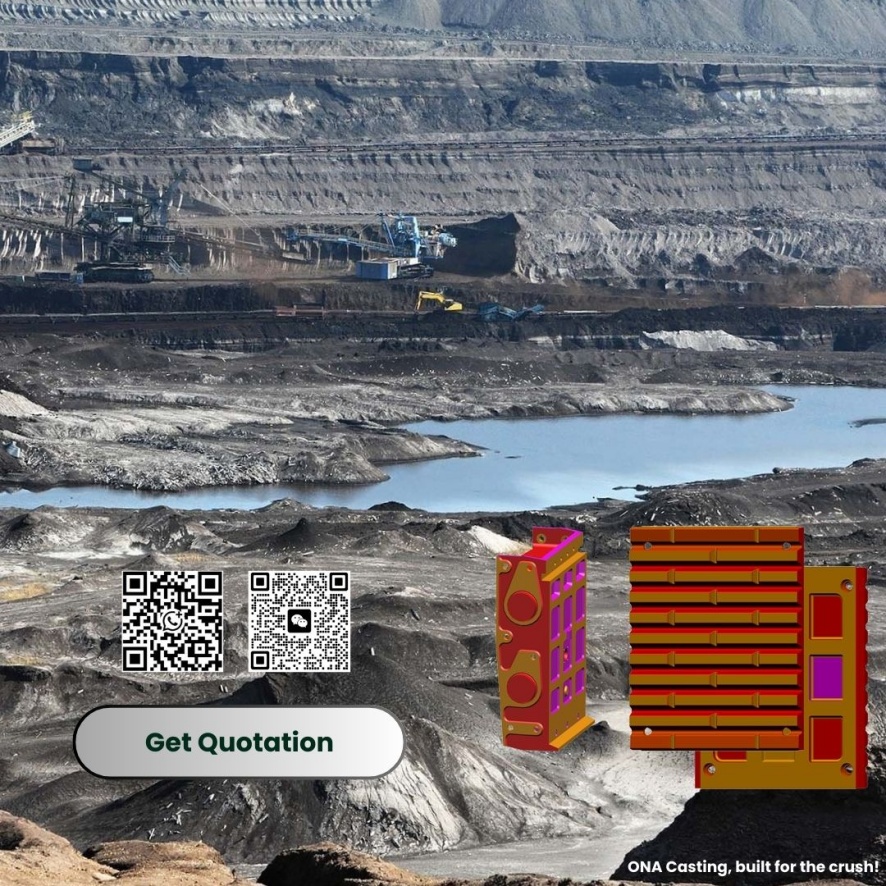
Material Analysis Suggestions
As a professional manufacturer of wear-resistant parts for crushers, ONA has extremely stringent requirements for materials: controlling the alloy ratio and purity from the source, scientifically matching high-manganese steel, high-chromium cast iron, or ceramic composite materials according to working conditions, and combining precision casting and heat treatment processes to ensure stable performance, resulting in long service life and high reliability under high impact and high wear conditions.
Crusher liners are key wear parts that protect the casing and transmit crushing force. The following is a comprehensive analysis of commonly used liner materials and key factors in their selection.
Manganese steel
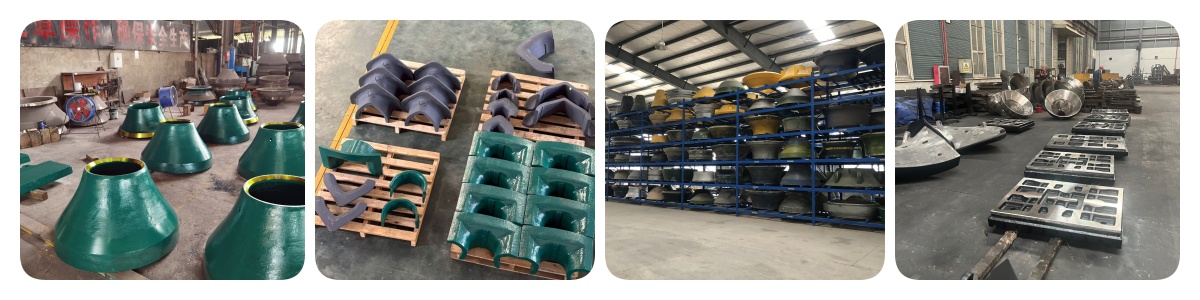
Features:
Variations:
High chromium cast iron
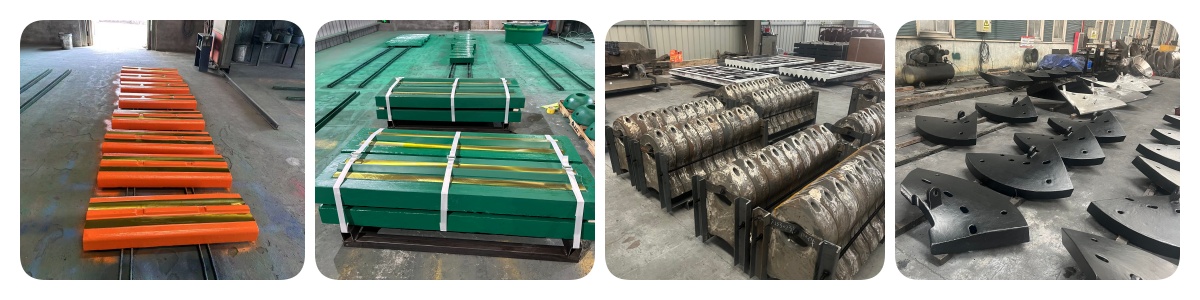
Features:
Excellent wear resistance: Contains high-hardness chromium carbide, with wear resistance far exceeding that of manganese steel, suitable for highly abrasive materials such as quartz sand and granite.
High hardness: Maintains high wear resistance for extended periods without work hardening, ensuring stable operation.
Relatively brittle: Poor impact toughness, unsuitable for high-impact conditions, but suitable for low-impact, stable feed environments.
Applications:
Best suited for: Suitable for secondary/tertiary crushing, low-impact, high-wear conditions.
Typical components: Impact crusher blow bar, cone crusher distribution plate, VSI rotor, wear-resistant parts for plate feeders.
Alloy Steels
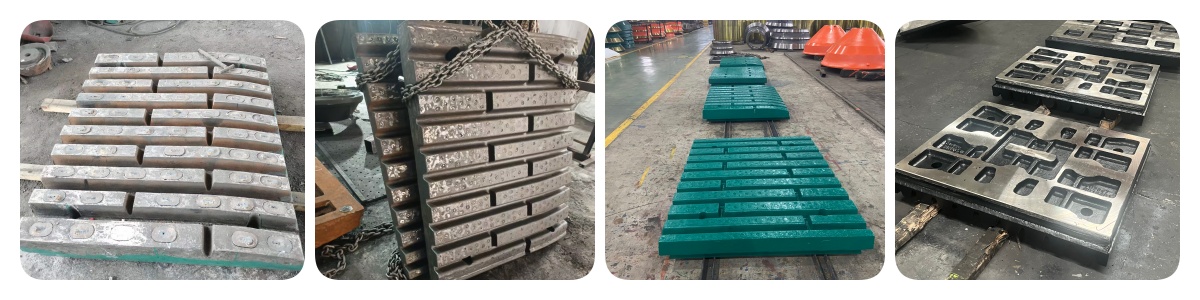
Features:
Excellent wear resistance: Significantly superior to manganese steel in fine crushing and highly abrasive conditions.
Balance of strength and toughness: Optimized alloying and heat treatment balance wear resistance and impact resistance.
High resistance to deformation: Resistant to deformation under extremely high pressure, maintaining cavity stability.
Applications:
Widely applicable to various crushing scenarios, especially suitable for fine crushing of highly abrasive materials, such as cone crusher mantle, cone crusher bowl liner, jaw plates for crusher, jaw crusher side plate and other parts.
Embedded alloys
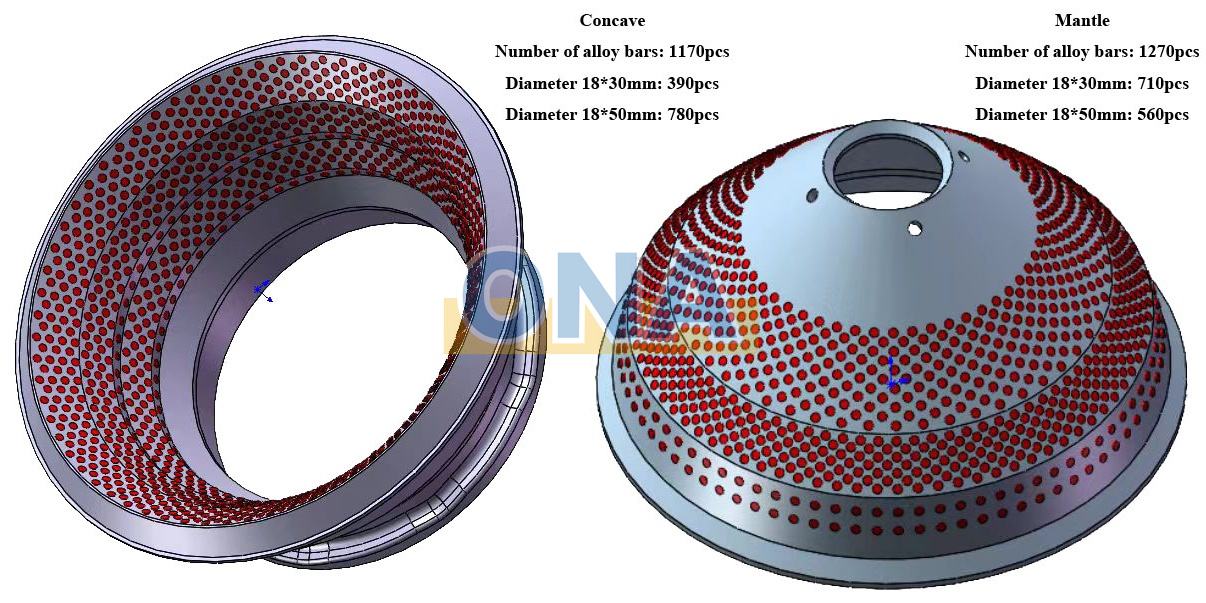
Features:
Ultra-high wear resistance: Tungsten carbide alloy hardness HRA 88-92, improving wear resistance by 1.5-1.8 times.
Combination of rigidity and flexibility: High-toughness matrix resists impact, alloy layer provides wear-resistant protection.
Precise reinforcement: Inlay only in high-wear areas, optimizing material utilization.
Self-sharpening effect: Continuous alloy protrusion maintains high-efficiency crushing performance.
Applications:
VSI Rotor tip set, Impact crusher blow bars and processing scenarios involving highly abrasive materials such as river pebble sand making, granite crushing, iron ore crushing, and high-silica ore.
Factors Influencing Material Selection
The core factors influencing material selection mainly include:



 IPv6 Network Supported |
Sitemap |
XML |
Blog |
Privacy Policy
IPv6 Network Supported |
Sitemap |
XML |
Blog |
Privacy Policy
Our hours
Mon 11/21 - Wed 11/23: 9 AM - 8 PM
Thu 11/24: closed - Happy Thanksgiving!
Fri 11/25: 8 AM - 10 PM
Sat 11/26 - Sun 11/27: 10 AM - 9 PM
(all hours are Eastern Time)